2026 NEW YEAR BOOK LIST

By Paul G. Chandler

For a number of years now, as a new year begins, I have had the practice of sharing a list of books that either significantly impacted me and/or that I immensely enjoyed throughout the previous year. Books have always been to me what the bestselling author Stephen King has famously referred to as “uniquely portable magic.” Books have served as some of my best guides, counselors, teachers and inspiring examples.
Speaking of the power of books, Ralph Waldo Emerson, the 19th century American essayist, philosopher, spiritual teacher, abolitionist, and poet, wrote, “It happens to us once or twice in a lifetime to be drunk with some book which probably has some extraordinary relative power to intoxicate us and none other.” I couldn’t agree more. However, I would say that it has happened to me much more often than once or twice!
Over the course of the last year, I found the below 12 books “intoxicating” each in their own way – intellectually stimulating, educationally distinct, culturally inspiring or spiritually deepening. Reflecting the diversity of my interests, my 2026 New Year Book List is comprised of numerous literary genres – memoir, biography, fiction, autobiography, poetry, religious studies, history, personal development and spiritual inspiration. While some of the titles were published within the last year, all were within the last several years.
May you find some "portable magic" of your own amongst these pages!
Note: These books are not listed in any particular order.
_________________________________________________________________________
– Andrea Wulf

A friend told me about this book, assuring me it was a captivating read. How right he was. The Invention of Nature tells the fascinating story of the life and influence of German polymath Alexander von Humboldt (1769-1859), a world-famous naturalist-explorer and visionary thinker who perceived nature holistically, influencing a myriad of others including Charles Darwin, John Muir, Henry David Thoreau and modern environmentalism. Compellingly written by the skillful historian Andrea Wulf, its pages bring to life Humboldt's daring adventures—from climbing volcanoes to exploring the Amazon—and makes complex science accessible. His insights that humanity's actions could damage this global system were revolutionary during his lifetime and his early understanding of nature as a web of life, vulnerable to human impact, resonates deeply today. Wulf gives us glimpses of his interactions and friendships with a unique range of people such as Johann Wolfgang van Goethe, Thomas Jefferson and Simon Bolivar. This thoroughly researched and beautifully written biography reveals how Humboldt blended meticulous observation with poetic vision, inspiring poets and revolutionaries alike. Don’t miss this absorbing intellectual journey!
Patriot: A Memoir - Alexei Navalny

My work in Russia in the early 1990s as the Soviet Union faced collapse, was full of riveting experiences in which I learned of quiet heroes who worked tirelessly in the shadows, in hopes that lasting freedom and opportunities for all would emerge from the chaos. Alexei Navalny would have been a teenager at that time. Imagining his life journey evolving at such a vital time in the history of his country makes the reading of Patriot: A Memoir, incredibly impactful. Navalny’s memoir is remarkable. It is an inspiring, firsthand account of courage against tyranny, offering a rare look into Russia's anti-corruption fight, a politician's transformation and the resilience of the human spirit in brutal conditions. Navalny's bravery, integrity and profound commitment to a better world through his fight against Putin’s regime, serves as a powerful testament to his values and wisdom, offering lessons on maintaining hope and dignity in the face of impossible circumstances. His moving "final letter to the world," infused with honesty and wit is a deeply personal reflection on life, faith and the enduring fight for freedom and justice for all humanity.
– Shaka Senghor

“Prison taught me that bars aren’t the only things that can keep you trapped.”
(Shaka Senghor)
The first time I encountered Shaka Senghor was during an endless road trip while scrolling through podcasts. His story is extraordinary. Invisible prisons or barriers in life, whether imagined or real, can sometimes seem as challenging to surmount as visible ones; in the case of Senghor, 19 years of incarceration for murder. New York Times bestseller, How to Be Free: A Proven Guide to Escaping Life’s Hidden Prisons, is a book bursting with hope. Senghor offers a rare glimpse into the depths of a human journey full of resilience and transformation, sharing a powerful and practical guide - breaking through chains, finding strength and embracing freedom - to overcoming whatever may be holding someone back in life. Communicating wisdom gleaned from his own raw and deeply personal experiences in prison to thriving as a mentor and motivational speaker, Senghor offers insights and thoughtful tools to transform setbacks into purposeful moments toward achieving lasting freedom in daily life, regardless of circumstances. Highly recommended: a truly inspiring read.
Cat on the Road to Findout – Yusuf/ Cat Stevens

The life and music of the enigmatic singer-songwriter Cat Stevens has long fascinated me. I actually got to meet him in London about ten years ago and I fully resonate with his desire to “build bridges” among people and to explore a meaningful inward journey. Raised by a Baptist mother with Swedish roots and a Greek Orthodox father with Cypriot roots, it was fascinating to hear him tell the story behind his rise to stardom, his spiritual conversion to Islam in the late 70s, and his decades long hiatus from the musical scene. Dedicated to “The Seeker,” in his own words, Cat on the Road to Findout, narrates a personal story, yet with universal appeal, revealing the man behind the scenes of iconic success on the musical stage and offering a rare glimpse into the “whys” of a life on a quest for spiritual depth and meaning. His writing is honest and insightful, humorous and poetic; a thoughtful memoir exploring life’s challenges, identity, faith and a deep drive for purpose amidst a complex world. Don’t miss the opportunity to delve into the engaging world of Yusuf/Cat Stevens.
How the Stars Get in Your Bones: A Book of Blessings – Jan Richardson

Open the eyes
behind your eyes
and see what reveals itself . . .
—From “Blessing for Dreaming,”
Jan Richardson
The intriguing title of Jan Richardson’s recent book “How the Stars Get in Your Bones: A Book of Blessings,” caught my attention and I wondered at the use of the word blessing. Would it be a book of poetry, would it hold divine whispers, or perhaps a sacred touch of wonder? Within its pages I discovered a lyrical world of exploration - words that resonated, moments of awakening and a recognition of my own inward journey. As an artist, writer and ordained minister, Jan Richardson gives voice to a unique way of seeing and being. In this, her most recent collection of blessings, she facilitates a guided journey through landscapes of grief, loss and healing while finding joy and love infused in life and transforming challenges into paths of courage. This engaging book of poetic blessings offers a valuable opportunity to set aside time to pause, to reflect and to wonder.
Rilke: The Last Inward Man – Lesley Chamberlain

I have long been spiritually fed by the rich poetic voice of Rainer Maria Rilke (1875-1926). To discover Leslie Chamberlain’s book, Rilke: The Last Inward Man, was a deeply enriching gift; I was engrossed from page one on. This journey into the heart of an artist, for whom the inner world offered a rich landscape of resources, is both perceptive and intimate in its telling. Chamberlain writes: “His life had a narrow focus. But his poems grew into huge questions.” And those subtly posed questions are imaginative, life-giving and timeless. Weaving her own refreshing translations of Rilke’s poetry throughout her narrative, she explores the complex layers of an intense creative who masterfully translated raw experience into enduring art. Providing context to his life, the silent spaces between his words and his grappling with matters of life, death, sex, the ordinary and the divine come to life. What emerges is a portrait not of a man who merely wrote poems, but of one navigating the "unseen centers" of existence with fragile intensity. Don’t miss this invitation to pull aside from a noisy world and tend to the inward journey.
- John Kaag

Sick Souls, Healthy Minds: How William James Can Save Your Life by John Kaag provides a profound philosophical journey that speaks directly to modern anxieties and the search for meaning. Through his deeply personal approach to writing, Kaag blends intellectual history, memoir, and practical philosophy in a remarkably accessible way, avoiding a self-help approach to easy happiness. Drawing on the wisdom of William James (1842–1910), widely considered the "father of American psychology" and a founder of the philosophical school of pragmatism, in which the value of an idea is determined by its practical usefulness, a compelling and thoughtful exploration unfolds. Skillfully woven throughout its pages is the argument that by confronting our doubts, anxieties, and imperfections, we can cultivate deeper purpose, resilience, and personal authenticity. The book’s curious title originates from James's distinction between people prone to experiencing despair ("sick souls") and those more naturally hopeful in outlook ("healthy-minded"). Consider reading this book as an invitation to embrace your own complexity and view life’s struggles as a source of enduring strength.
Gertrude Stein: An Afterlife – Francesca Wade

Working in Paris as a young adult, I was drawn to the iconic figure of Gertrude Stein (1874 - 1946) and the stories surrounding her legendary “salons” - intimate gatherings that fostered ideas and creativity in Paris for several centuries - discussing art, philosophy and politics. Stein moved to Paris from America in the early 1900s, and began to collect art and unsurprisingly foster relationships with leading avant-garde artists and writers, from Matisse and Picasso to Hemingway and Fitzgerald. This solidified her role as a pivotal cultural patron, pushing against boundaries in both art and society. Using newly available material in her meticulously researched innovative biography, Gertrude Stein: An Afterlife, author Francesca Wade, offers a fresh, multifaceted look at one of modernism's most formidable figures, exploring her life, mythmaking genius and the shaping of her lasting legacy. Engaging narration describes the bohemian, modernist art world in 1920s Paris, Stein’s interactions with fascinating figures, her life under Nazi occupation and relationship with her lifelong partner. This is an absorbing study of an important cultural personality and the enduring power of her "afterlife." A book well-worth your time!
The Most Secret Memory of Men: A Novel - Mohamed Mbougar Sarr

Over time, the forgotten works of authors can slip into obscurity, becoming “secret memories” of humanity and no longer impacting subsequent generations. With the force of a supernova, 35-year-old Mohamed Mbougar Sarr, acclaimed Senegalese author and first writer from sub-Saharan Africa to win France's prestigious Goncourt Prize, has written an explosively creative work of fiction. Skillfully employing a variety of perspectives and narrative styles – mystery, noir, satire, diary entries, letters, critic reviews, oral narratives and magical realism influenced by Senegalese mysticism – Sarr weaves together an engaging story that emerges like a mosaic gradually coming into focus. The plot is gripping; following a young Senegalese writer in contemporary Paris who discovers a legendary 1938 novel and becomes obsessed with finding its author who vanished after a plagiarism scandal. Traversing the globe from Paris to Amsterdam to Argentina to Senegal to the DR Congo, an unexpected journey ensues, both an inventive literary quest and a deep exploration of history, identity and the lasting influence of literature.
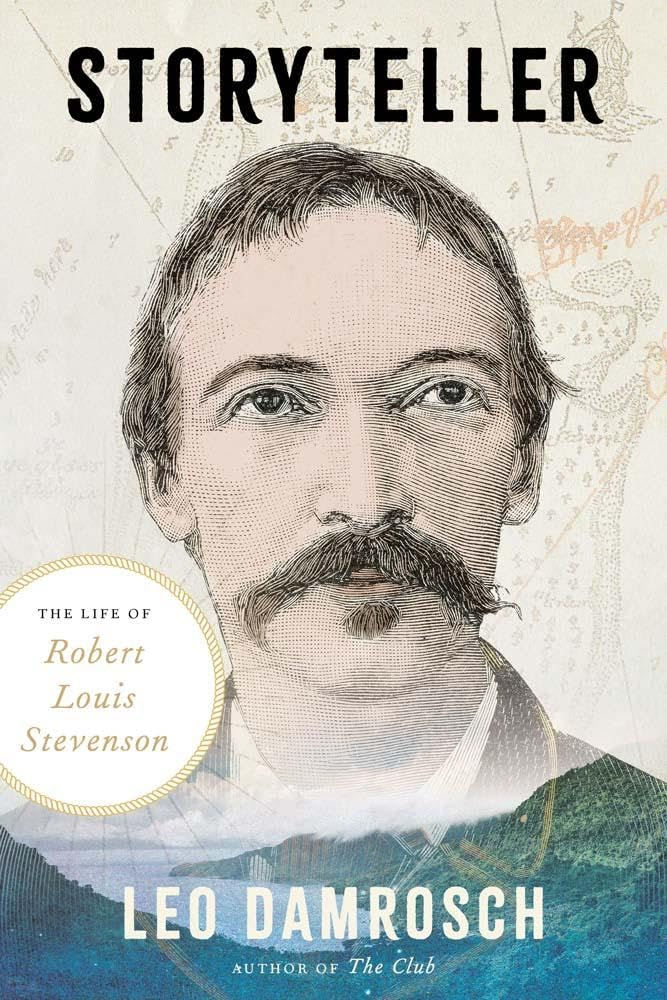
Storyteller: The Life of Robert Louis Stevenson - Leo Damrosch
“For my part, I travel not to go anywhere, but to go.”
— Robert Louis Stevenson,
Travels with a Donkey in the Cévennes
I have been drawn to the life and writings of Robert Louis Stevenson (1850–1894) for as long as I can remember, resonating with his sense of insatiable curiosity and desire for worldwide adventure. Stevenson tapped into the dreams of his childhood and infused them into a life that defied chronic illness and allowed him to live a life that mirrored his adventurous fictional exploits. Delving into the pages of literary scholar Leo Damrosch’s biography Storyteller: The Life of Robert Louis Stevenson, I discovered a brilliantly written account that unfolded like the discovery of a treasure map. A reading adventure ensued in which I was transported into Stevenson’s fascinating life and imaginative world. From misty Edinburgh to sundrenched Samoa, from a conservative religious upbringing to a freedom-seeking literary life, Damrosch’s account is movingly written, exploring the storyteller’s complexities, relationships and writing, weaving throughout generous quotations from his own letters and rarely seen photos and illustrations. Don’t miss this engaging reading adventure!
The Mesopotamian Riddle: An Archaeologist, a Soldier, a Clergyman, and the Race to Decipher the World's Oldest Writing - Joshua Hammer

Bestselling author and veteran foreign correspondent Joshua Hammer, known for his non-fiction historical quests, The Bad-Ass Librarians of Timbuktu being one of my favorites, has woven a masterful tale once again. His latest book, The Mesopotamian Riddle: An Archaeologist, a Soldier, a Clergyman, and the Race to Decipher the World's Oldest Writing is a suspense-filled narrative that reads like an epic story of adventure. Providing a fascinating look into ancient Mesopotamian civilizations and a complex linguistic mystery, the book delves into personal rivalries, political tensions and imperial ambitions during the golden age of archaeology. Its real-life characters are as intriguing as the intrepid journey itself; featuring a swashbuckling archaeologist, a suave military officer turned diplomat and an eccentric Irish clergyman, all competing to be the first to crack the cuneiform code. Treat yourself to this absorbing intellectual adventure!
Miracles and Wonder: The Historical Mystery of Jesus – Elaine Pagels

In her most recent book, Elaine Pagels, emeritus professor of religion at Princeton University known for her groundbreaking research on early Christianity and Gnosticism, explores the biggest subject of all, Jesus. Miracles and Wonder: The Historical Mystery of Jesus reads like a historical mystery as Pagels addresses the mysteries about Jesus with investigative fervor. Through both religious scholarship and spiritual reflection, she provides a fresh perspective within the search for the historical Jesus by examining the first-century historical and cultural contexts of which many are unaware. Pagels eloquently presents the miraculous stories of Jesus and the subsequent developments of Christian belief as responses to the historical challenges about Jesus's legitimacy and message, some forty to seventy years after Jesus’s death, when the Gospels were written. She shares how the writers of the Gospels communicated compelling narratives (i.e. virgin birth, miracles, resurrection, etc.) not to report history, or even biography, but to publicize Jesus’s message - to persuade others to “believe in the good news” and join their new movement. Through art, literature and personal experience she highlights how these very stories ended up created an enduring image of Jesus that continues to inspire to this day. In this regard, Pagels believes that the very concept of all humans being equal and that each individual has sacred value, originated with Jesus. She believes this is what eventually led Christianity, in the course of 2000 years, to become the largest of religious traditions. This book stirred something in me that I haven’t experienced for a long time. It should however come with a "Caution Label" saying that those with traditional Christian beliefs may find the book challenging and discomforting. However, I believe that readers of all persuasions, if approaching it with an open mind, will find something in Miracles and Wonder that can speak deeply to them.

Paul G. Chandler is an author, art curator, speaker, interfaith peacemaker, cultural diplomat and an authority on the Middle East and Africa, and the Abrahamic spiritual traditions. He grew up in Senegal, West Africa, and has lived and worked extensively around the world in senior leadership roles within publishing, the arts, relief and development and the Anglican Communion. As the Founding President of CARAVAN, he is recognized as a global leader in using the arts to build bridges, toward fostering peace, harmony and wholeness in our world. He is also a sought-after guide on the all-embracing spirituality of the early 20th century poet-artist Kahlil Gibran, the author of The Prophet. He has authored several books including the bestselling IN SEARCH OF A PROPHET: A Spiritual Journey with Kahlil Gibran (Bloomsbury). For more information, visit: www.paulgchandler.com.


